Three formats, plus attachments and ratings
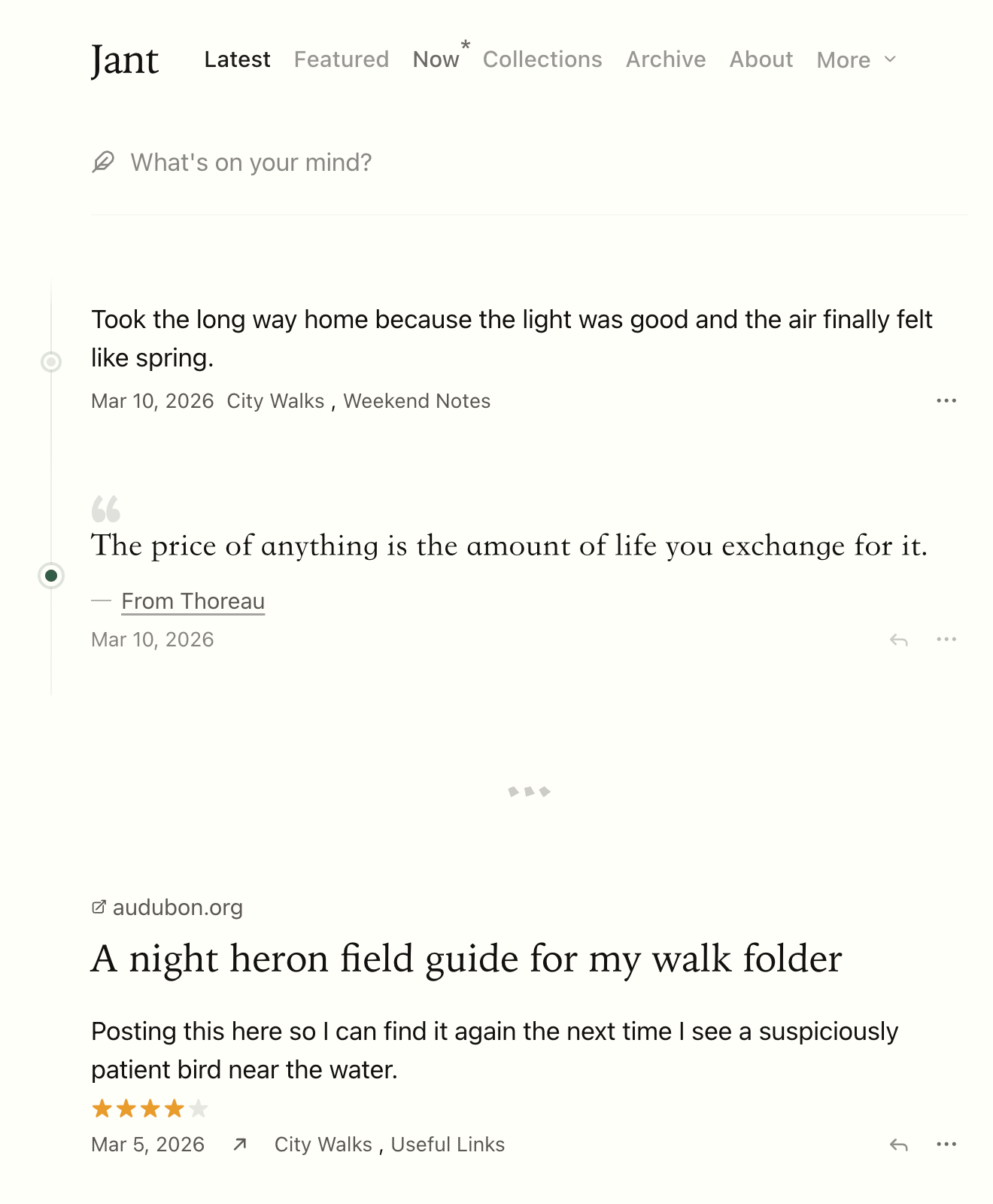
All three formats are first-class. Posts support rich attachments and optional ratings for books, films, music, and links.
Or see the author's Jant blog: owen.jant.blog
All three formats are first-class. Posts support rich attachments and optional ratings for books, films, music, and links.
Threads let ideas unfold over time. Collections gather related posts.
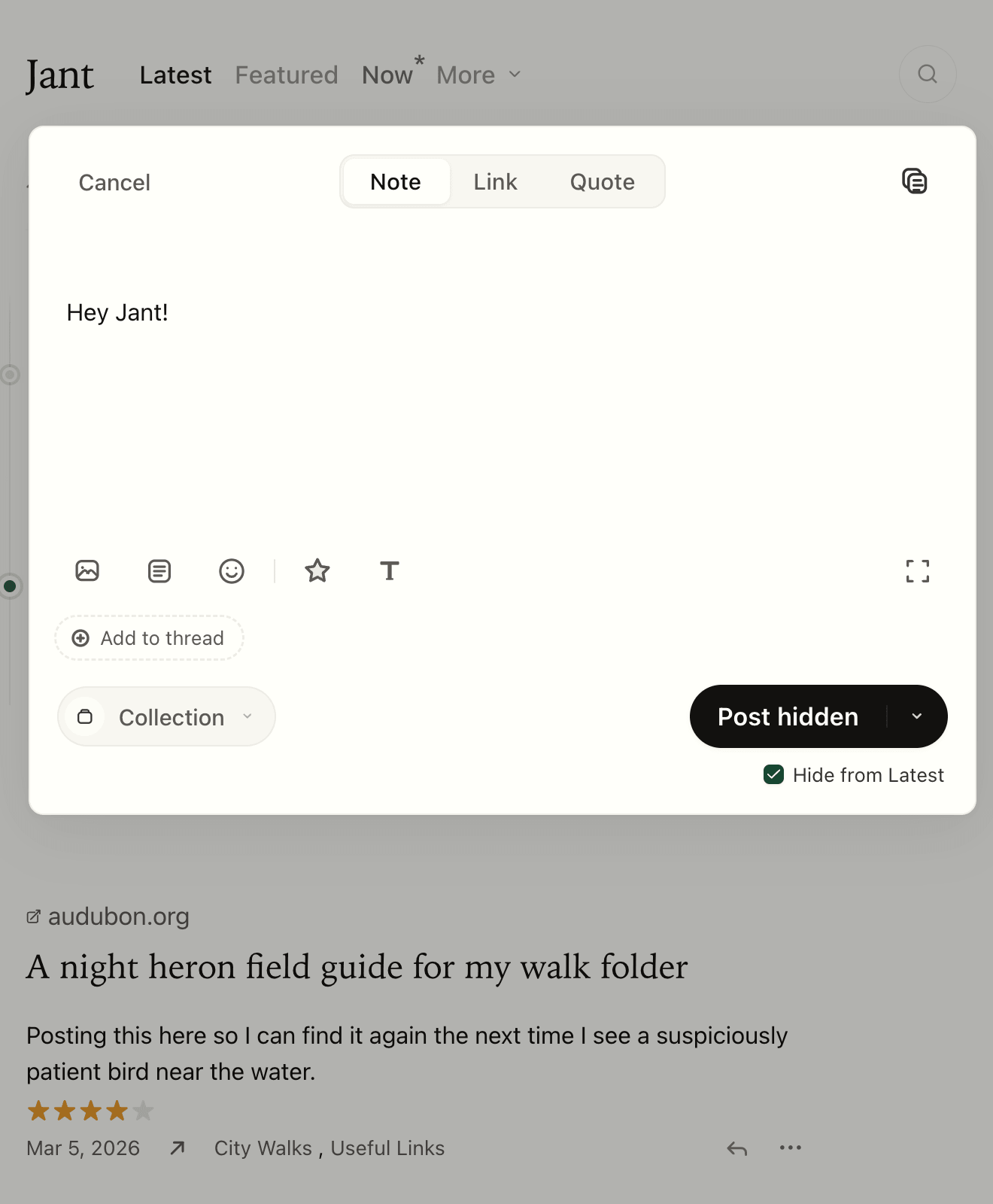
Writing and organizing →Choose how each post appears: hidden from Latest, shown in Latest, or Featured and pushed to RSS.
Publishing and visibility →Every edit is written back to GitHub as a Markdown file. The repo can run as a Hugo static site; Jant also provides a full HTTP API and built-in MCP support.
GitHub sync →All the coolest people I've ever met found me through something I wrote.
— Derek Sivers, Anything You Want
Read more: Why blog today
Deploy to Cloudflare Workers in one click. No servers to maintain, and most personal blogs fit within Cloudflare's free tier.
Deploy to your own server with Docker, using SQLite or Postgres. Built for users who prefer self-hosting and control over their runtime environment.
Hosted Jant is run and maintained by Jant, with automatic upgrades, HTTPS certificates, and custom domains built in. Ideal for users who don't want to manage servers.
All three run the same code. Switching between hosted and self-hosted goes through Export and import.
Yes, two ways:
The name comes from Jantelagen — a concept from a 1933 Nordic satirical novel, often summarized as "don't show off, don't compare." In Scandinavia the term carries a critical edge, often invoked as shorthand for a collective culture that suppresses individuality. Happiness researchers tend to read it the other way around: a quiet agreement not to compete or intrude on each other is part of what makes Nordic societies feel calm, and one of the reasons people there report being so content.
Today's social networks push in exactly the opposite direction:
Most blog systems inherited the same logic, treating "published" and "broadcast" as a single decision — you post something, and it lands in your RSS feed, your subscribers' readers, and your homepage timeline at the same moment. Jant separates publishing from broadcasting: each post chooses its distribution — hidden from Latest, shown on Latest, or marked Featured to enter /feed and push to RSS.